What every page carries
The site is static and light enough for a low-end phone, but each page brings the same set of helpers with it.
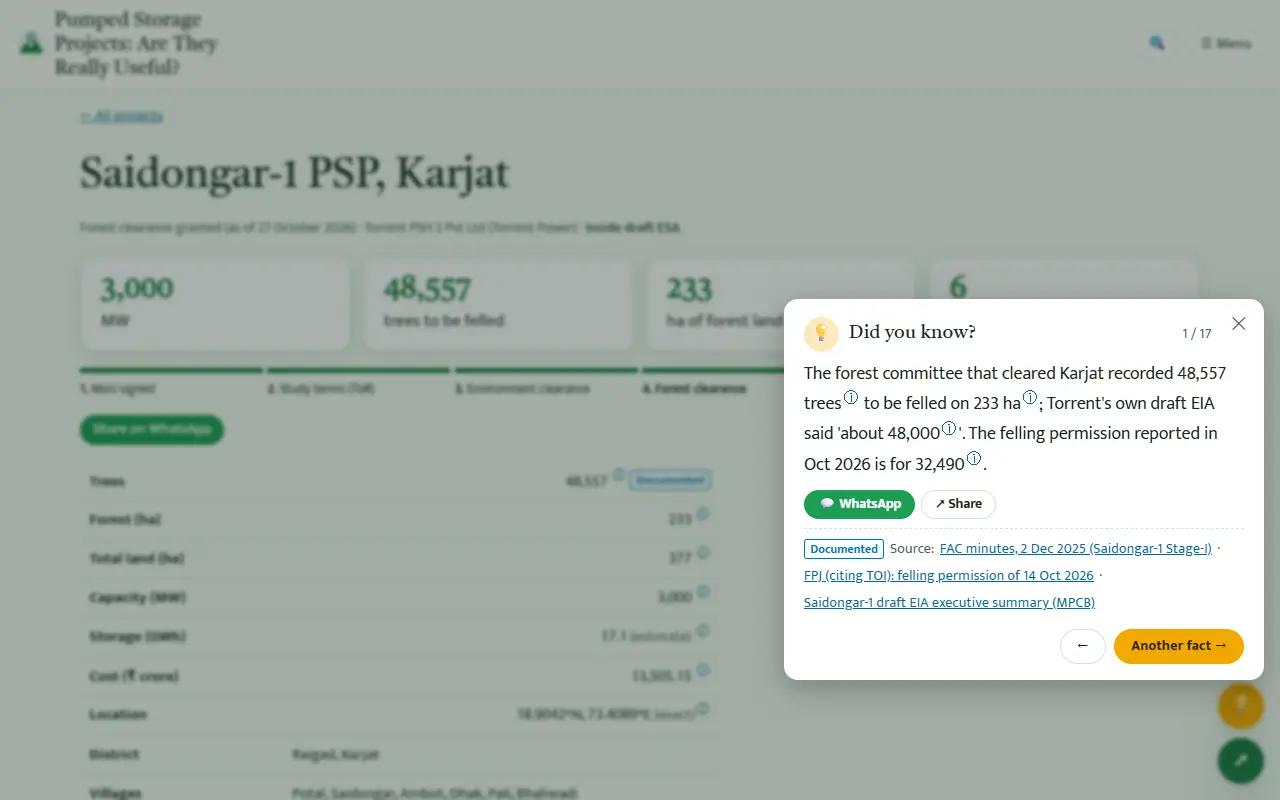
💡Did you know?
A bubble on every page opens 24 short facts picked for that page or project, each with its source and a WhatsApp button.
ⓘSource bubbles
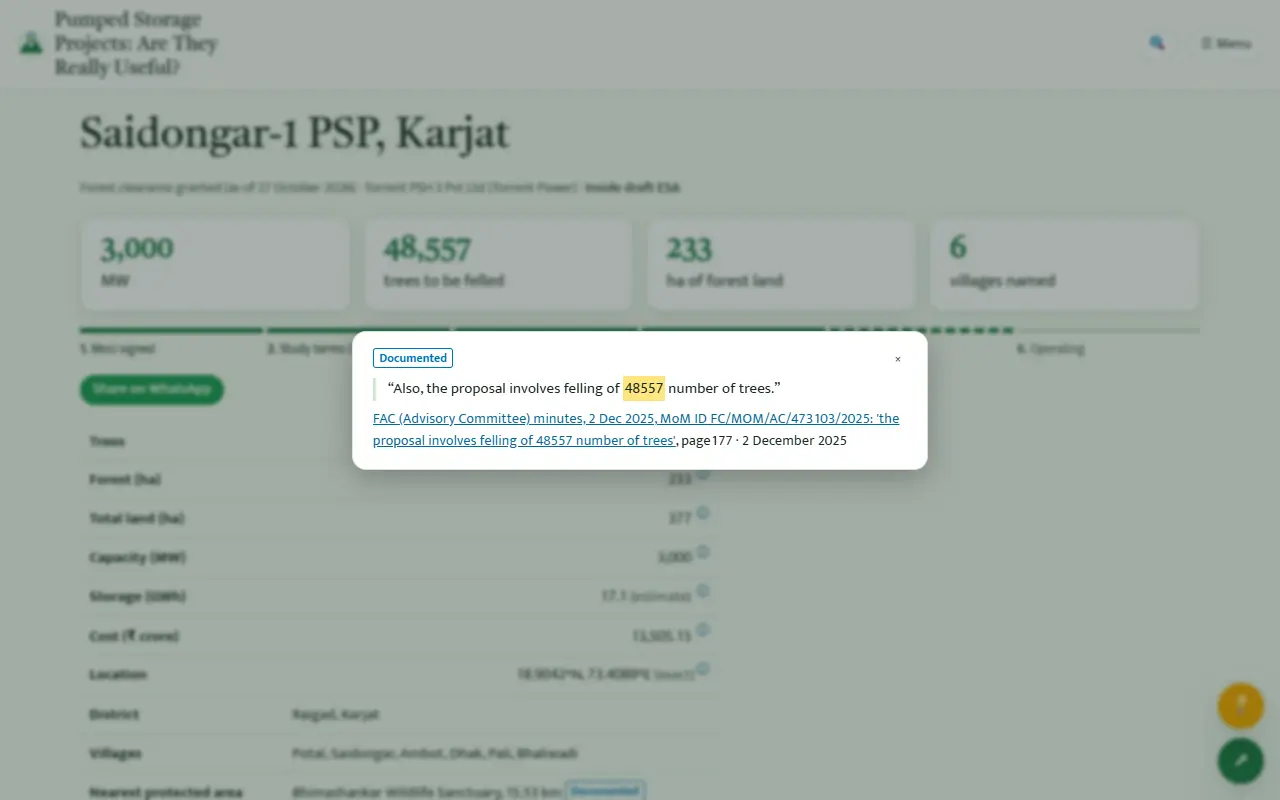
Every number has an ⓘ. Tap it for the quoted sentence with the number highlighted, the document, its page and the evidence label.
अEnglish & मराठी
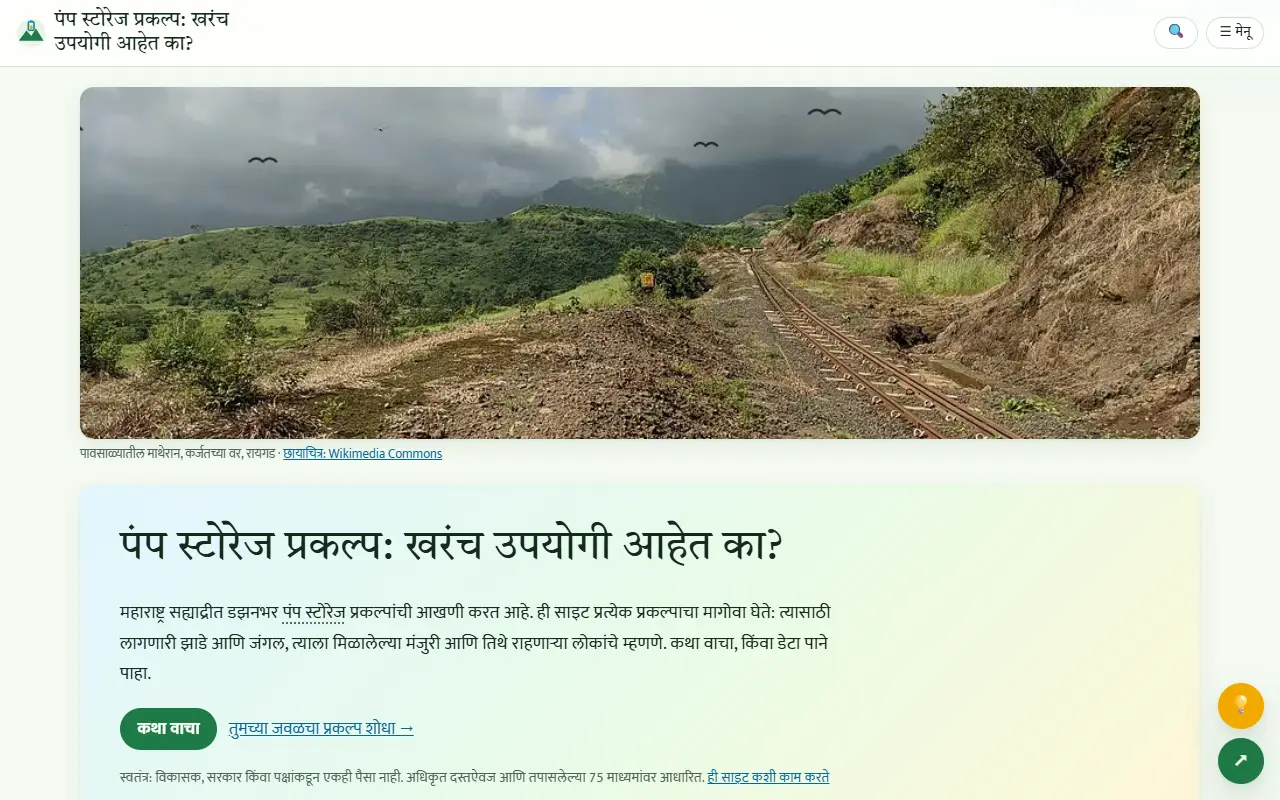
Every page in both languages, from one URL. The choice is remembered; a shared link opens in the sender’s language.
🔍Search everything
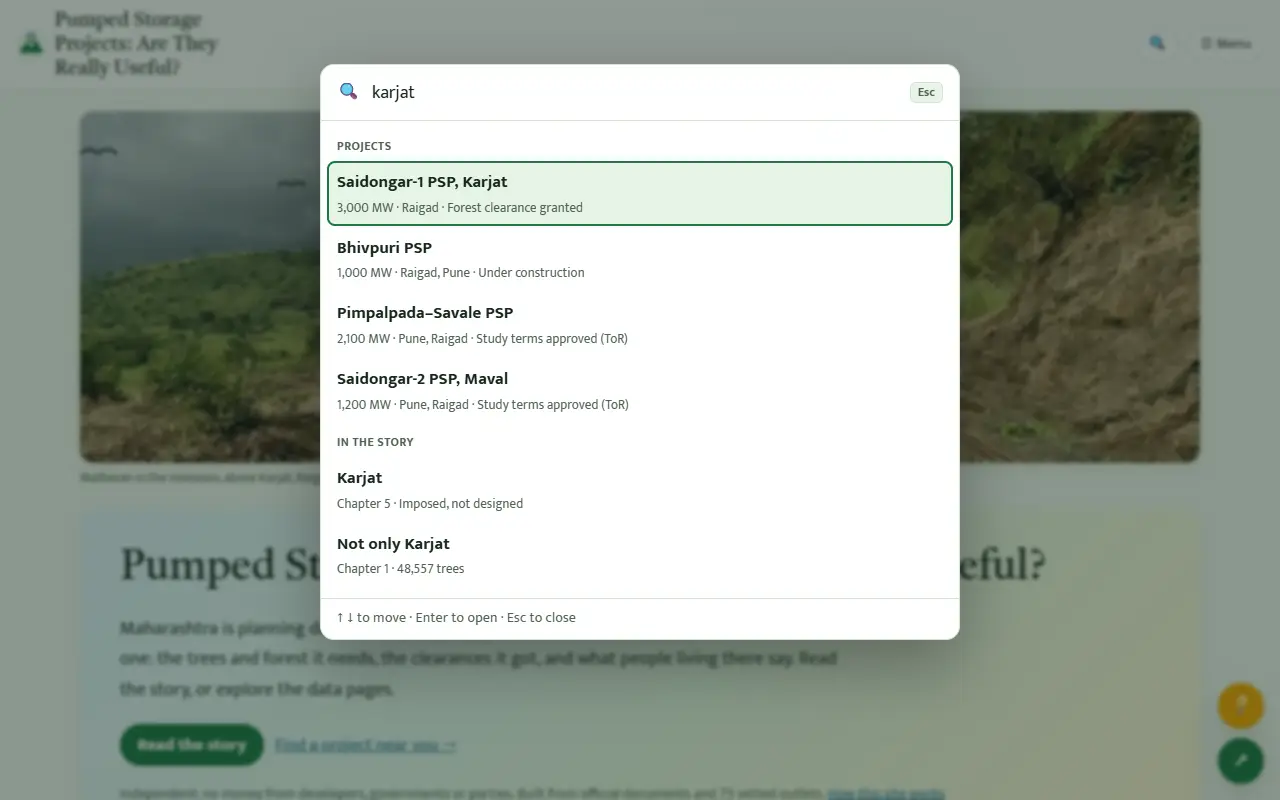
Ctrl/⌘+K, / or the 🔍 button searches projects, story chapters, glossary terms and pages at once.
📡RSS feed
/news.xml carries the news page, so readers can follow new reports in any feed reader.
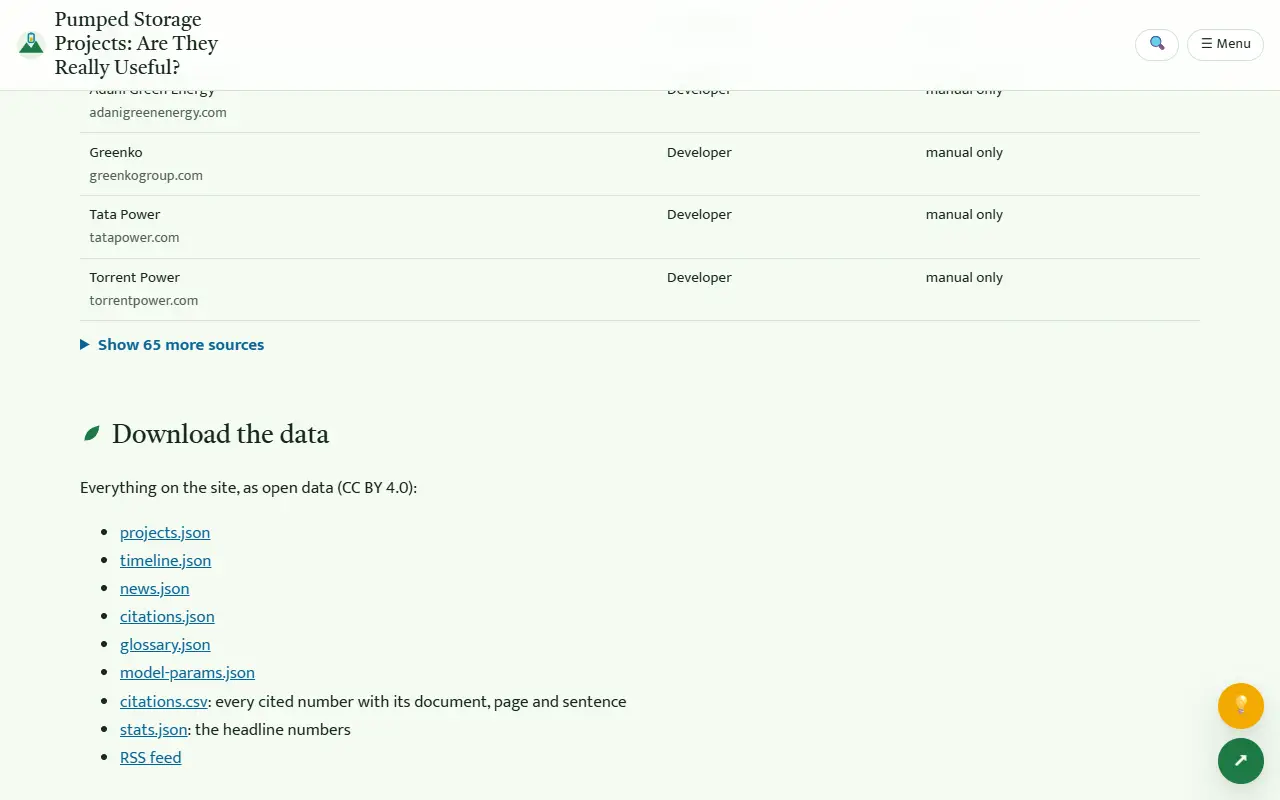
⬇Download the data
Projects, timeline, news, citations, glossary and model inputs as JSON and CSV, under CC BY 4.0.
📖Glossary cards
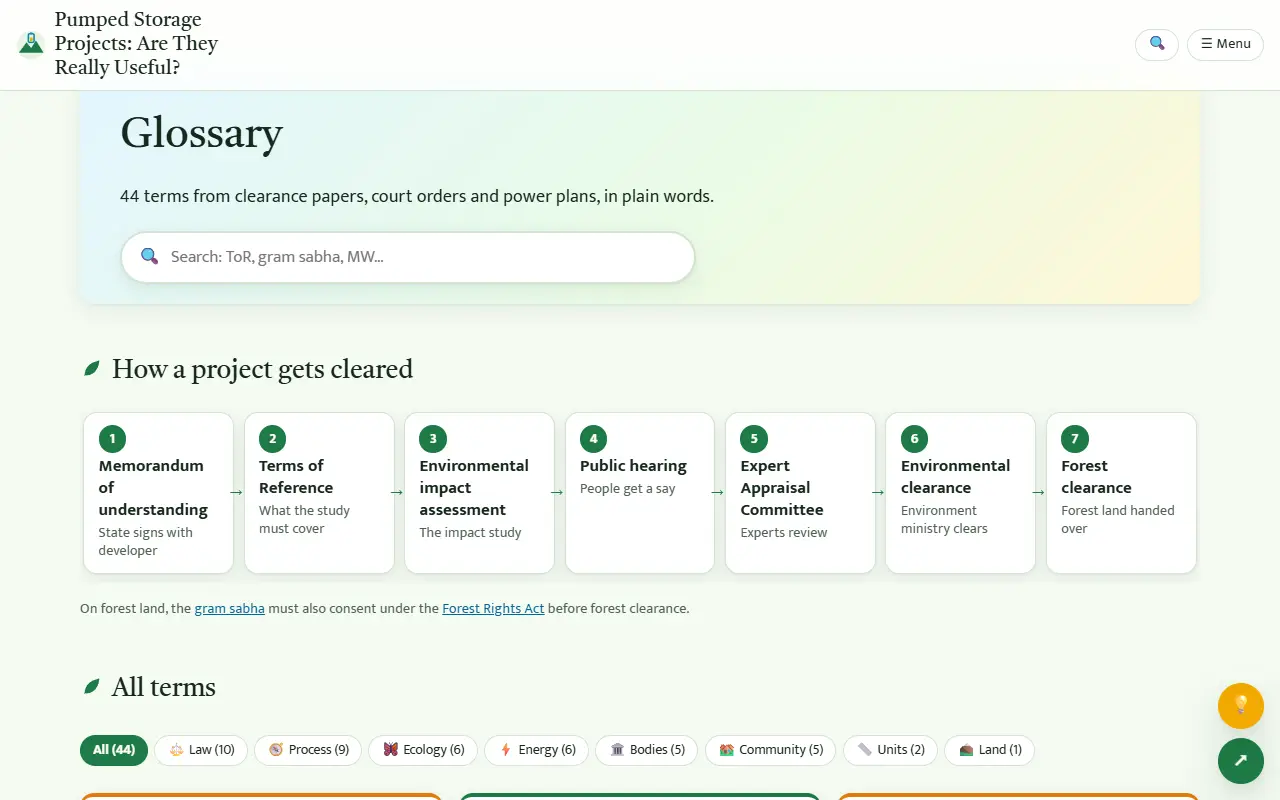
The first use of ToR, EC, ESA, gram sabha and 40 other terms links to a plain-language card.
↗Share cards
A share button on every page and a ready image card for each story chapter, made for WhatsApp.
Home, and a story in ten chapters
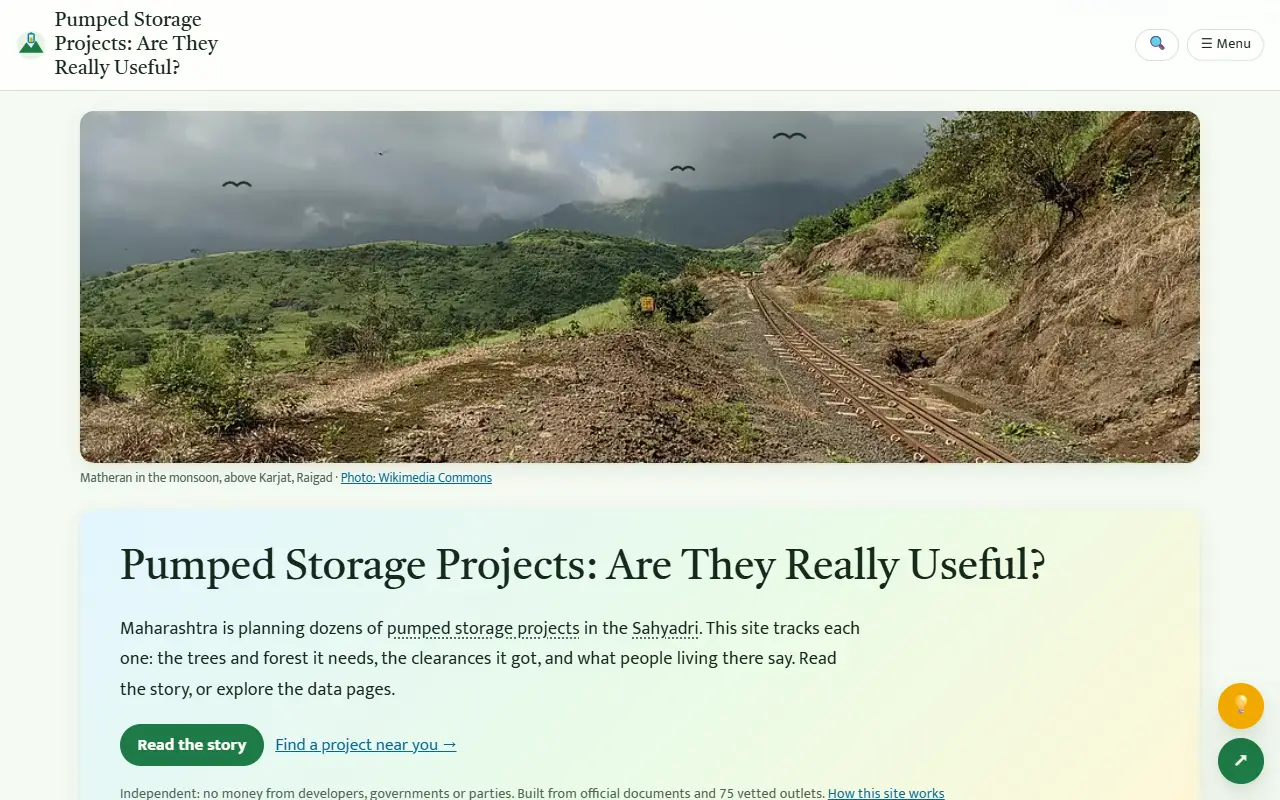
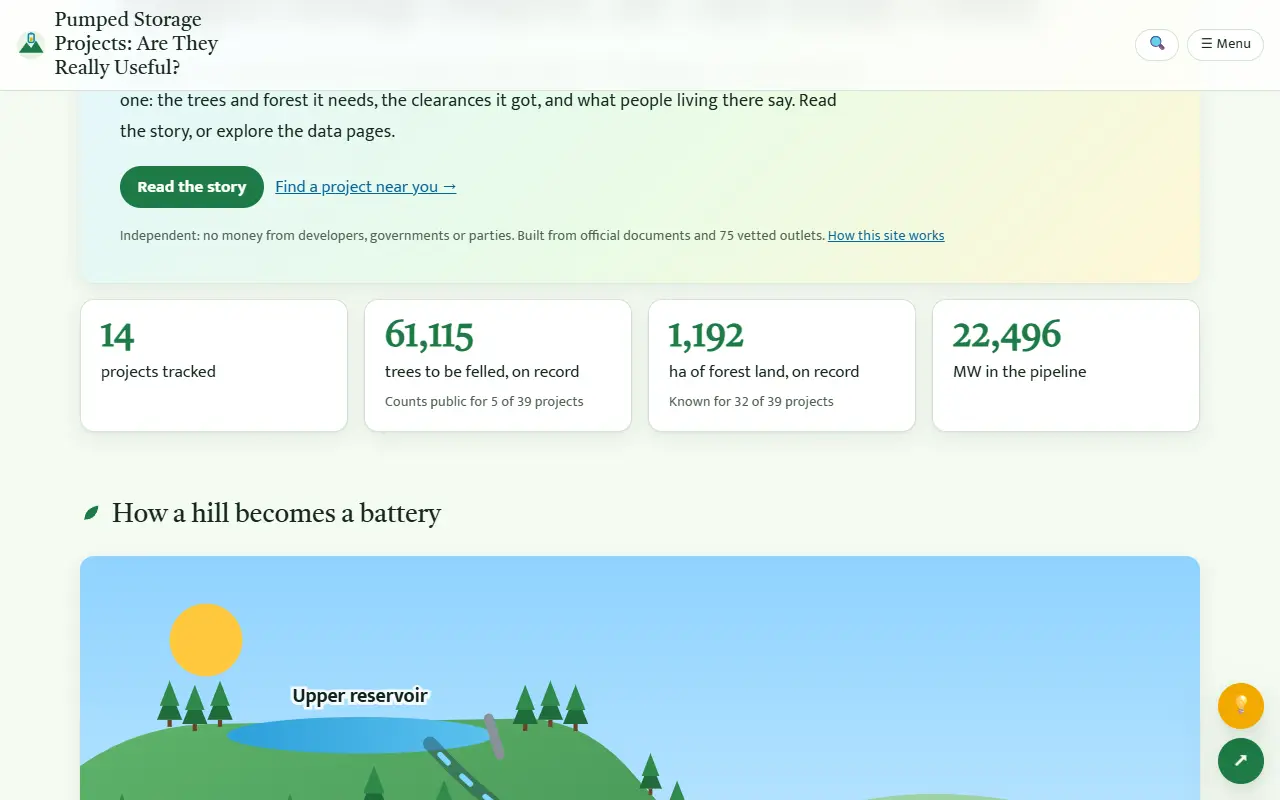
Home opens on a Sahyadri photo and four headline numbers, then an animated explainer, How a hill becomes a battery: cheap daytime power, dear evening power, the cost to the forest, the cost to life around it. A fair box says what pumped storage is good for, and cards lead to every page.
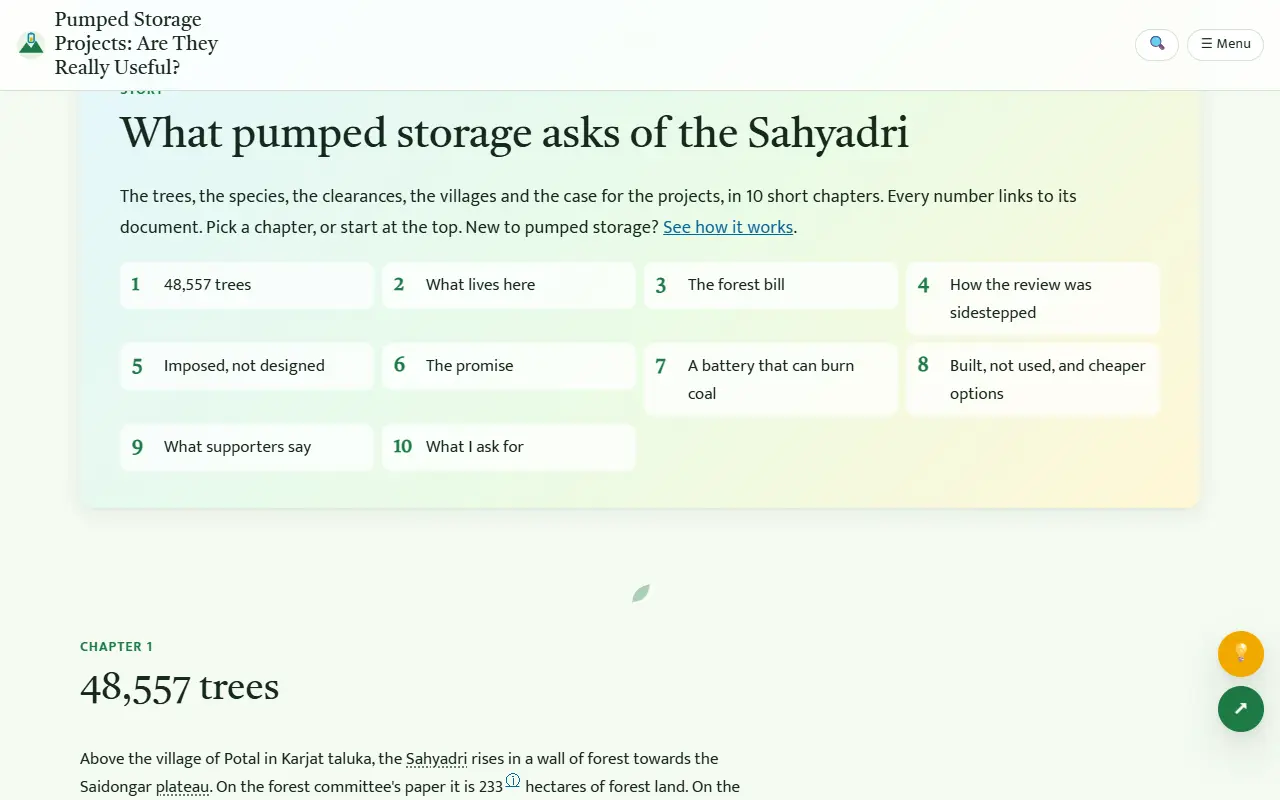
Story is the long read: 48,557 trees · What lives here · The forest bill · How the review was sidestepped · Imposed, not designed · The promise · A battery that can burn coal · Built, not used · What supporters say · What I ask for. Each chapter ends with a share card.
Projects: 39 dots on one ridge
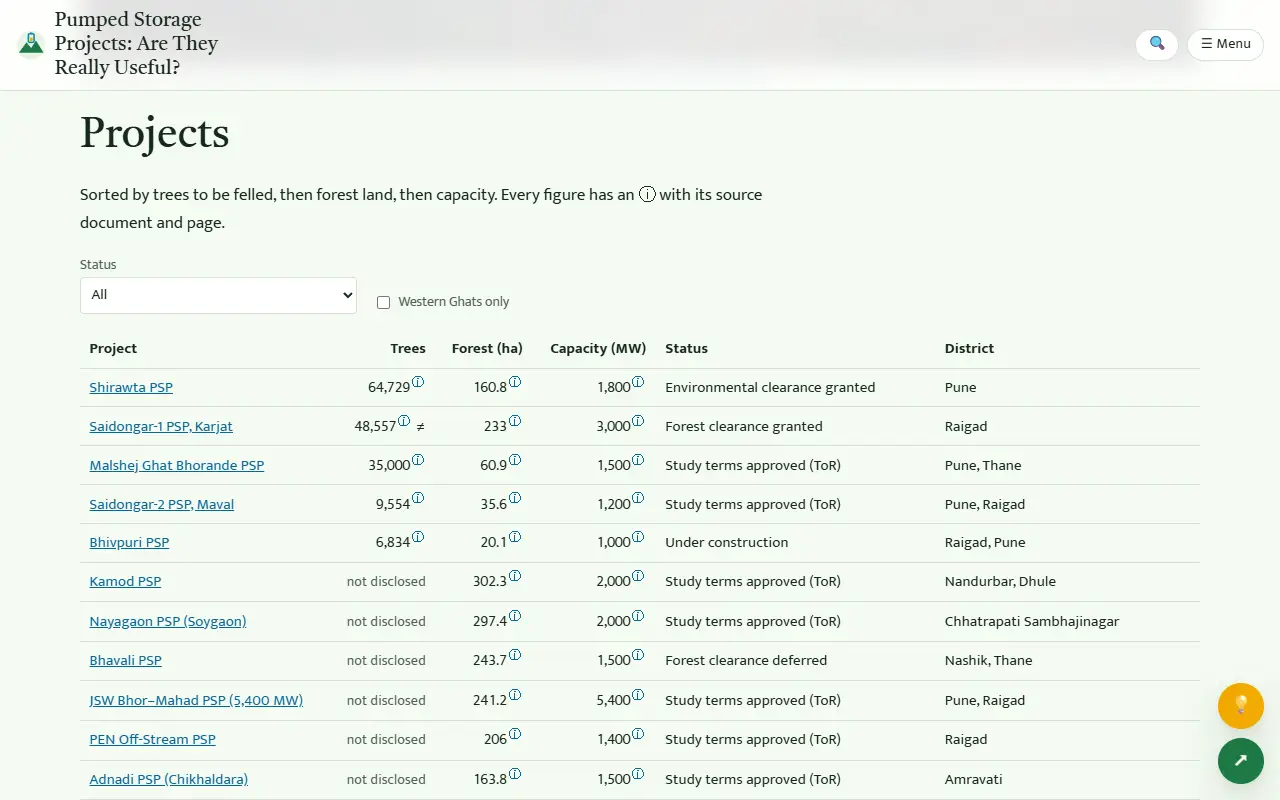
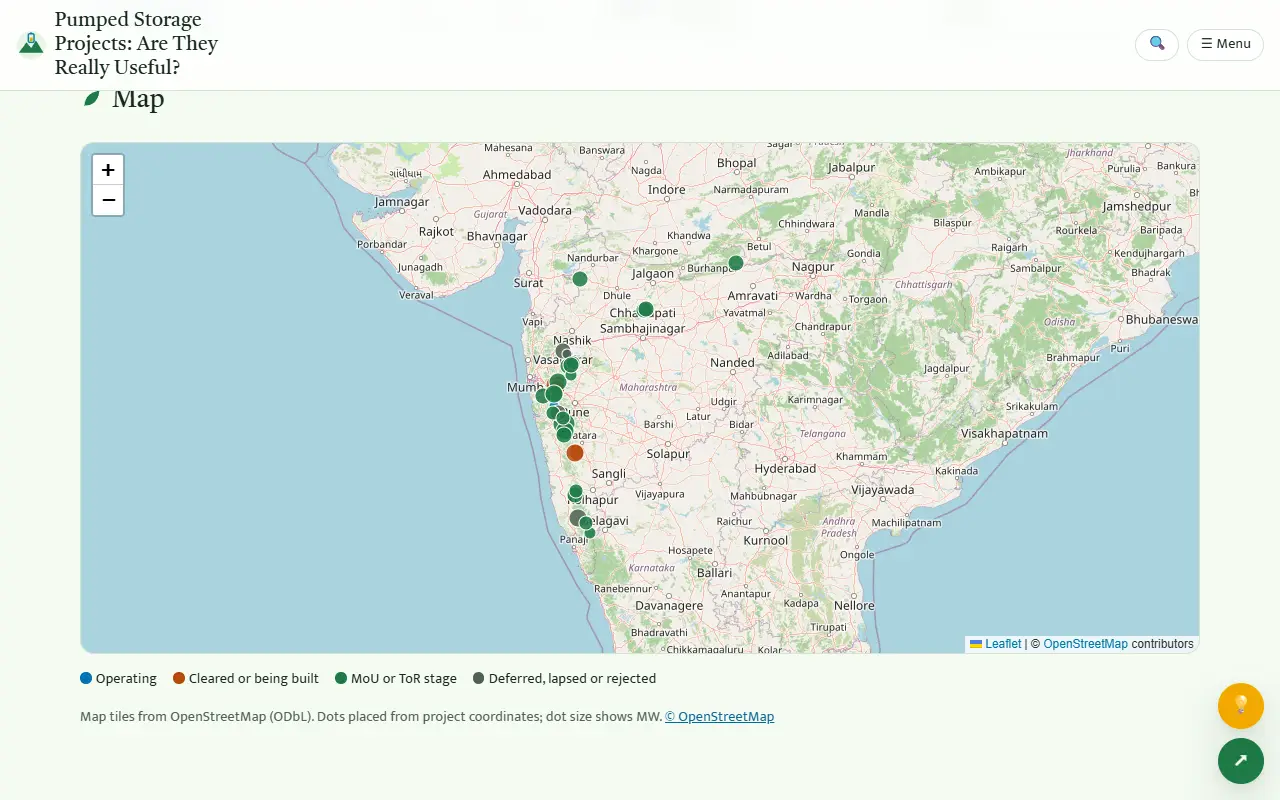
Every pumped storage project planned in Maharashtra, 60,615 MW in all, in one table and on one map.
- The table is sorted by trees to be felled, then forest land, then capacity — never by megawatts first. Filter by status, or show Western Ghats projects only.
- The map (Leaflet on OpenStreetMap) places each project from its coordinates; dot size is MW, colour is the clearance stage.
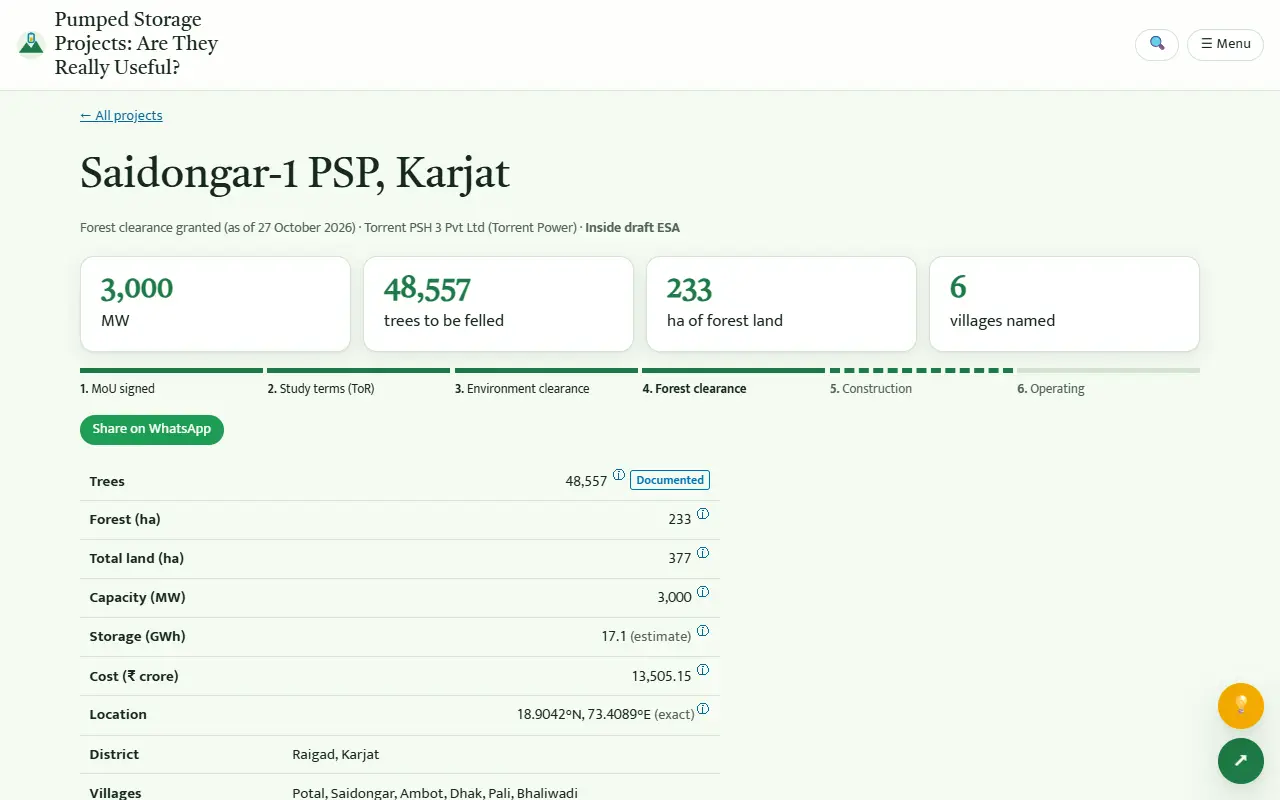
- A page per project: MW, trees, forest hectares, villages, a progress bar from MoU to operation, its timeline, its documents and a WhatsApp button.
Timeline and news, every morning
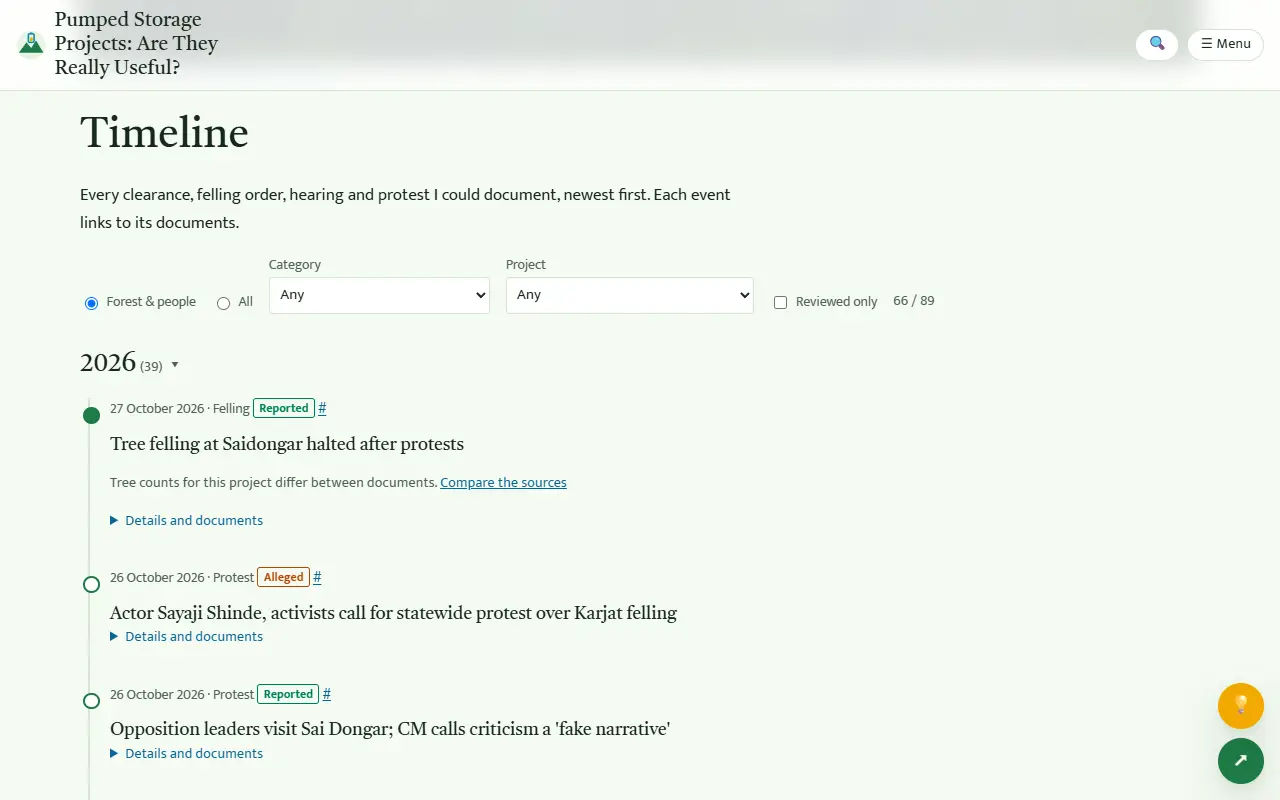
Timeline: 89 events — MoUs, study terms, clearances, felling orders, hearings and protests — newest first. It opens on the “Forest & people” filter, and can be narrowed by year, category, project or verified-only.
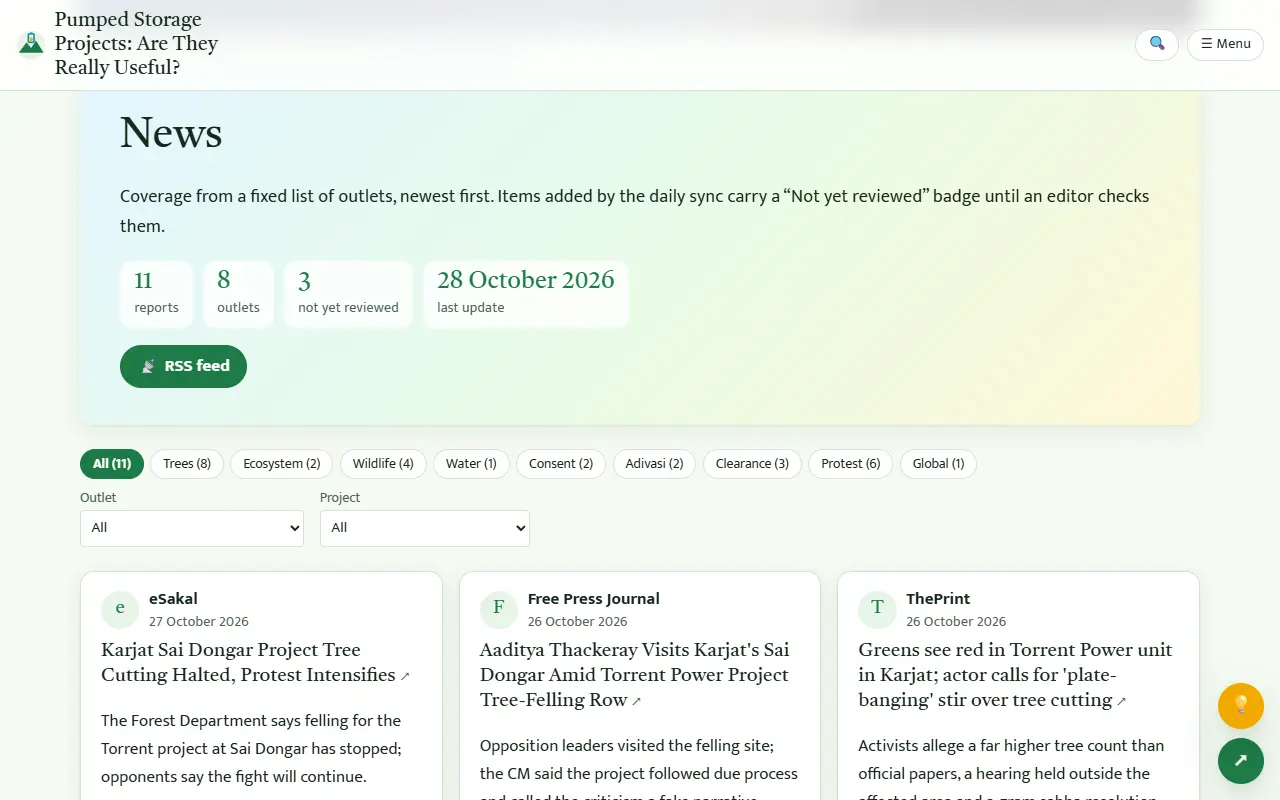
News: reports from a fixed list of 75 vetted outlets, newest first, with tag filters that put trees, ecosystem and consent first. A daily sync adds new items; anything not yet checked by a person carries a not yet reviewed badge. The same list is the /news.xml RSS feed.
Shortcuts, and the voices they skip
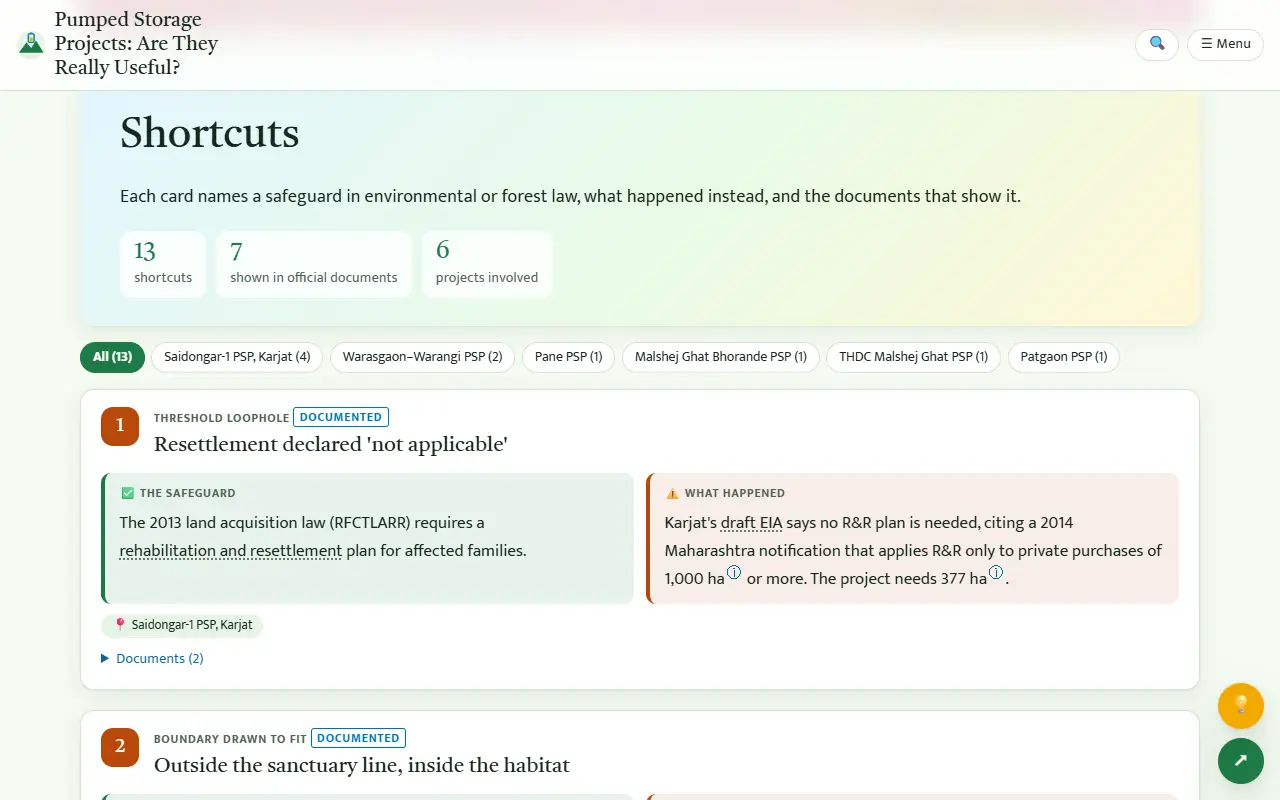
Shortcuts: 13 cards, each naming a safeguard in environmental or forest law, what happened instead, and the documents that show it. Example: the land law requires a resettlement plan, but Karjat’s draft EIA calls it “not applicable” by citing a 1,000 ha threshold — for a project that needs 377 ha. Filter by project; 7 are shown in official documents.
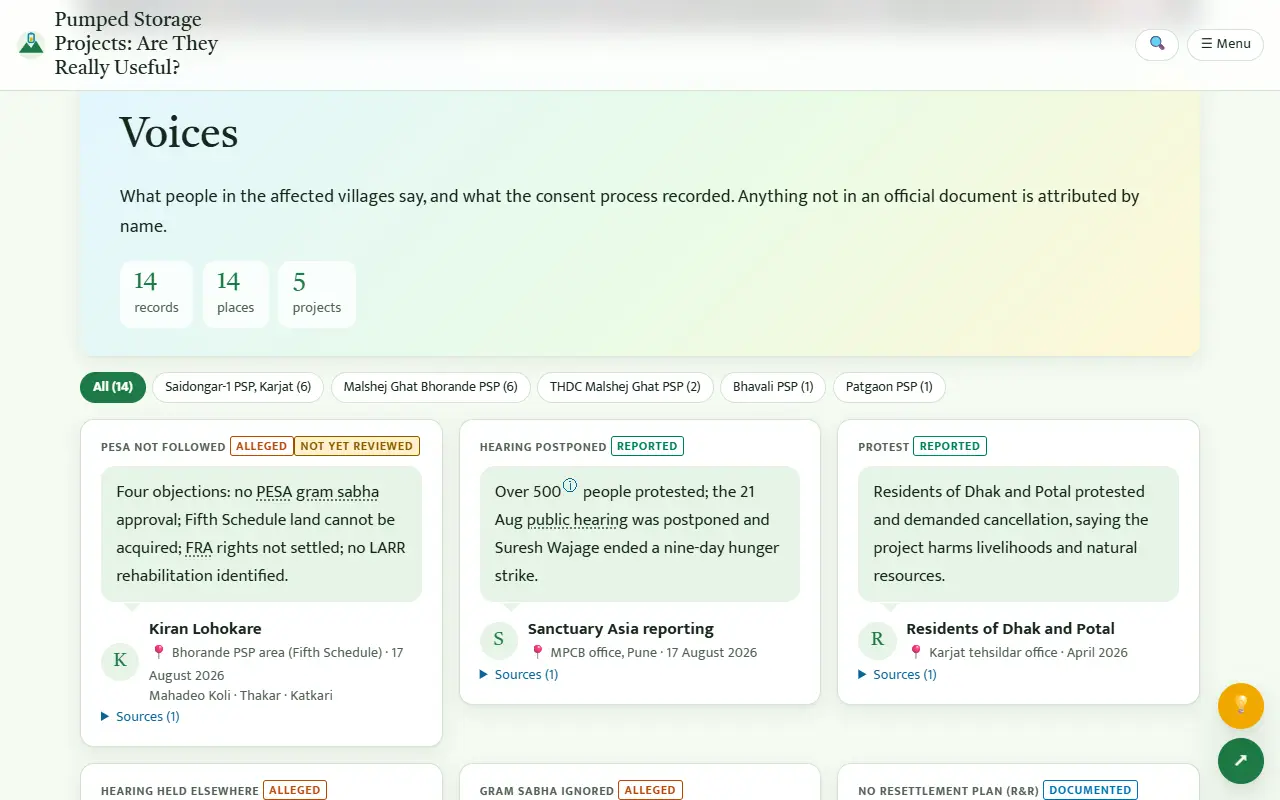
Voices: 14 records from the affected villages — gram sabha resolutions, public hearings and objections — attributed by name, with an evidence label on each.
How the numbers are worked out
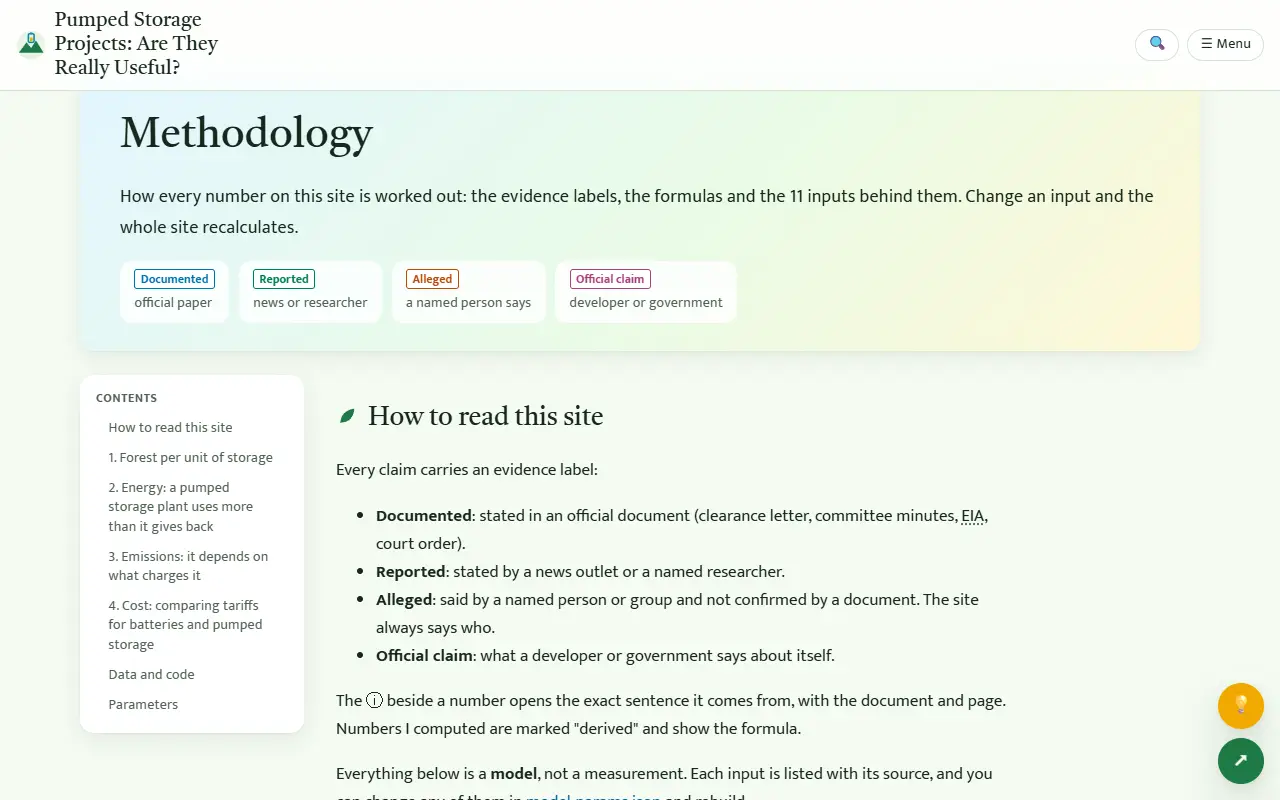
Methodology: 11 inputs and every formula behind the model — forest per GWh stored, round-trip loss (100 units in, about 77.5 out), emissions on today’s grid, and battery vs pumped storage tariffs from recent tenders. It is labelled a model, not a measurement, and every input names its source.
Glossary: 44 terms in plain words — ToR, EC, FC, ESA, gram sabha — grouped by category, each with its own link.
About: the source policy, the full outlet list, corrections, the right of reply to developers, and the data downloads.